A Statement of Purpose


Since 2012 I have been responsible for
the garden at the Pry House Field Hospital Museum on Antietam National Battlefield. The Pry House garden began as a 19th century style medicinal and kitchen garden, including medicinal plants, herbs, and vegetables. As close as possible, these plants mirrored those available to the Pry Family in the 1860s, meaning heirloom varieties. Since then, the garden has transformed to focus exclusively on medicinal plants, becoming an exhibit of the flora that was employed by military and civilian caregivers in the Civil War Era.

I am strictly an amateur, with no real experience in growing a garden. The purpose of this blog is to document my experiences as I learn by doing. It is anything but authoritative and I welcome any comments and advice for a greenhorn. Please be kind!
Showing posts with label organic. Show all posts

Tuesday, March 19, 2013

Late Winter Seeds

Spring is on our doorsteps, and accordingly, I have begun sowing some of the first seeds in the garden. With snow falling on the ground yesterday afternoon, it might seem as though I am a bit early, but it's recommended that some early spring crops be sown a few weeks before the last frost. For example, the University of Maryland Extension Office recommends beginning to plant spinach as early as March 10, and leaf lettuce on March 15.


Before putting seeds in the ground though, the soil had to be turned over. I think that nothing works better than a plain old shovel.

I had some help from Kady, a Museum Studies student at nearby Shepherd University. Kady was visiting us last week to fulfill her museum practicum requirement. Helping in the garden was one of the many hands-on experiences we tried to show her during her visit.


I have put in six varieties of heirloom leaf lettuce. I have stayed away from head lettuce, both because I am not as much of a fan and because it was difficult to find an appropriate variety to the 1860s. The now ubiquitous and tasteless iceberg lettuce just wasn't around. As they take shape, I might talk more about the varieties I did select.


This is the first year for spinach in the garden. I am a big fan of the nutritious green leaf, so I hope that come spring we will have a bountiful harvest for salads and cooking. 


Inside, some of the first seedlings are emerging and looking healthy! This picture is already a few days old, but you can see some fenugreek sprouting. I hope that will have a few more seedlings to show you next week!


Tuesday, January 8, 2013

Stratifying Seeds (I Hope)

I took a break from the blog last week because it was New Year's, and in the wake of the Christmas holiday there was nothing much to talk about. I hope that most were able to enjoy a little time off with friends and family.

We are in the heart of winter now, but it's still time for me to begin the preparations for new plants in the spring. I wrote in previous posts that in the fall I collected some seeds from the wild and from plants in the garden. Many of those seeds have to be properly prepared if I am going to sow them for growing this year.

Separating milkweed seeds from the fluff

When we buy packets of seeds from the store or online, they are usually properly prepared and ready to be planted right away. However, the seeds of many plants, especially perennials, have to go through a winter's cold before they are willing to germinate in the spring. This is a protective measure so that seeds do not drop in the fall and begin to sprout, only to be killed by freezing temperatures.

Because I collected these seeds rather than leaving them in the dirt outside, I will need to give them a simulated winter inside before I can use them in the spring. This process is called stratification. this is something I have never tried before and I am hoping that it works, giving me productive seeds to start a little later this year.

Milkweed seeds ready for a cold treatment

To stratify the seeds, I needed some kind of medium to hold them during the process. Many experts have recommended a variety of options including vermiculite, perlite, and sand. I have chosen fine peat moss, made from decomposed sphagnum. I purchased it from a garden store, so it is sterile, meaning that it should be free from diseases and unwanted seeds from weeds.

Peat Moss

I took a bit of peat moss from the sealed packaging and added some water in a bowl. I then nestled the seeds in the dampened moss. Dampening the moss is supposed to allow the seeds to absorb some moisture, helping prepare them for eventual germination.


I put each bunch of seeds into small plastic resealable bags. After a few days at room temperature to encourage the seeds to take up some moisture, I put those bags in the refrigerator. I chose the bottom drawer of the refrigerator because that tends to be the coldest place without freezing.


I am currently stratifying for different species: Common Milkweed, Butterfly Weed, Jimson Weed, and Common Mullein. Stratification times can vary widely for different types of seeds, but for these particular species I think that about a month will be enough time in the cooler. 

I am very hopeful that this process will yield positive results come spring. If it does not work out though, it was at least an interesting learning experience.


Tuesday, December 18, 2012

Eggplant, Tomatoes, and Nightshade

Sometimes vegetables very familiar to modern Americans just were not on the dinner table in the 1860s. This is the case with vegetables like broccoli and cauliflower. Broccoli as an edible vegetable predates the Roman Empire, but it was not common in the United States until the 20th century. I have no heartache over this, and in the words of President George H. W. Bush, "I do not like broccoli and I have not liked it since I was a little kid." Unfortunately I am not President of the United States, so it is a bit harder for me to escape that sinister green vegetable.
(Disgusting)

However, when it comes to a tasty treat like eggplant I am sad to leave it out of the garden at the Pry House. Americans did commonly grow eggplant in the 19th century, but strangely enough, Victorians usually cultivated it as an ornamental, rather than as a food source. The reason for this may be that eggplant is a relative of nightshade and it was therefore perceived as poisonous. In fact, the leaves and flowers of eggplant are mildly toxic.


There are some noted exceptions, however. Presidents George Washington, Thomas Jefferson, Andrew Jackson, and Andrew Johnson were all great enthusiasts of eggplants, as was the honorary American, the Marquis de Lafayette. Eggplant was Johnson's absolute favorite food. Ordinary Americans, however, were largely unfamiliar with the purple and white fruits as a food.

Presidents from Tennessee seem to love their eggplant!

I have a similar problem with trying to grow tomatoes in the Pry Garden. As another relative of the nightshade plant, early Americans generally avoided tomatoes, or "love apples" as a poisonous plant. Again, they were sometimes grown as ornamentals, but usually not as a food.

Deadly Nightshade, Atropa Belladonna

By the 1860s, however, most Americans were becoming comfortable with eating tomatoes. After a long and determined campaign by a few enlightened souls, white Americans began to accept the tomato as a safe and uniquely tasty garden fruit. The tomato was originally a New World plant, but was not found in English America until its reintroduction by Europeans. The exact history of the tomato's origin's, spread around the globe, and introduction to the dinner table remains fairly murky and often conflicting, but we are at least certain that the fleshy red fruit was on its way up well before the Civil War.

"Red Apples from the New World" - 1563
from Johannes Kentmann's Kräuterbuch (Book of Herbs)

Nevertheless, it's never that easy! The vast majority of the scores and scores of tomato varieties available to the modern gardener have no place in the 1860s. The plump, round, smooth tomato so dear to us today was not developed until the decades after the Civil War. Earlier tomatoes were short, squat, and looked like they were puckered, with deep ridges around their circumference.

Purple Calabash Tomato, very reminiscent of early tomatoes

I am still struggling to find some good varieties of tomatoes which would be appropriate for the Pry Garden. I believe I have found a few and will move forward with procuring them for the spring.

Tuesday, December 11, 2012

Seed Catalog

The 2013 seed catalog came last week from Baker Creek Heirloom Seeds. Baker Creek has been the Pry Garden's go to source for seeds because it has such a wide selection of old heirloom varieties of vegetables and other garden plants. I have been very distracted lately, poring over the pages and making some selections for next year's garden.


I thought I would share a few of the more interesting items that are offered and some selections for the garden at the Pry House.

Some garden vegetables may seem very straight-forward. A carrot is a carrot, a potato is a potato, and a cucumber is a cucumber. That may not always be the case! We eat many of the same kinds of fruits and vegetables today that Americans enjoyed 150 years ago, but the varieties we are most familiar with today often did not exist during the Civil War. Likewise, some varieties of produce which were very popular in earlier centuries are extinct or very rare today. Sometimes the differences are subtle and we might hardly notice them, but often the difference between an 1860s apple and the Red Delicious you can find at the supermarket are striking.

As an example, the Baker Creek catalog offers over two dozen varieties of true cucumbers, but none of them appear to be correct for a an American Garden in the 1860s. Instead, I may plant burr gherkins, also known as maroon cucumbers. They are not true cucumbers, but are a close relative, also originating in Africa and coming west with enslaved peoples. Though rarely seen today, they have been in the United States for over 200 years and were once a very popular food. Reviews indicated that it heavily producing plant. They are small, spiky, and pretty wild-looking!

Burr Gherkins

Sometimes the heirloom seed catalog offers a wide spectrum of varieties more strange and exotic-looking than anything you will find in the grocery store or the garden store's seed rack. It can be a lot of fun to look at dozens of fruits and vegetables that are so different from what we are probably used to seeing on our own tables. Sadly, many of these fun varieties are not period to the 1860s or are not local to the United States in that time period.

This year's catalog offers 88 varieties of melon, not counting watermelons. Some are fairly wild-looking and I would love to grow them, but they just don't meet the standards of this garden.

Tiger Melon from Ukraine

Rich Sweetness 132 Melon from Russia

Ushiro Uri from Japan

Thankfully not all of the interesting and different-looking melons are beyond my reach. I will likely grow this variety of melon which Baker Creek labels as "Ananas D'Amerique A Chair Verte." It is of French origin, but has been grown in the United States for over 200 years. According to their catalog, it was grown by Thomas Jefferson and has been available commercially in America since 1824. I have never been a fan of melon, but others like it and this will be fun to try growing.

Ananas D'Amerique A Chair Verte Melon

This year I have decided to plant cowpeas in the garden. You might be more familiar with black-eyed peas, a more common variety of cowpea today. The seed catalog offers a number of varieties purported to date from the 1860s and beyond, but I will likely go with the simple Clay Cowpea.

Clay Cowpeas

Several seed companies correctly indicate that this was a common staple of Civil War armies, especially in the Confederacy. I have never grown anything like these before, so I am looking forward to learning how to plant, tend, and harvest these little beans. I am very curious to see how they might taste compared with more familiar black-eyed peas.

More on seed selections next week!!!

Several photos taken from Baker Creek Heirloom Seeds at rareseeds.com. Check them out!

Tuesday, December 4, 2012

Milkweed Seeds

I have been doing a bit more seed collecting recently, so I thought I would talk about two plants in the same family that I have collected, one from the garden and one from the wild.

This spring, I added Butterfly Weed to the garden. Sometimes called Pleurisy Root, it is a native perennial plant in Maryland. It is more commonly seen in ornamental gardens for the appeal of its clustered orange flowers that appear in the late summer. As the name suggests, Butterfly Weed can be very attractive to various species of butterflies, including the Monarch.


The root of Butterfly Weed was used commonly by native peoples as a medicine. It was quickly adopted by white settlers and continued to serve medicinally through the 19th century. During the Civil War, the Confederate States Medical Purveyors listed Butterfly Weed as part of it's official pharmacopeia. The confederate government paid civilians to harvest the roots for use in the Southern army.

Butterfly Weed was most commonly used to treat a variety of respiratory/pulmonary ailments, including consumption (tuberculosis), pneumonia, bronchitis, and pleurisy (a painful inflammation of membranes between the lungs and chest wall). It was thought to relieve pain and inflammation and act as an expectorant. Butterfly Weed was also sometimes prescribed as a treatment for a host of unrelated conditions ranging from colds and fevers to rheumatism and venereal diseases. I have no idea if it actually worked.


The Butterfly Weed that I planted this year did not fare terribly, but it did not flourish either. I believe that this is because of soil conditions. This plant prefers to grow in gravely or sandy soils and that is not what I had given it. Perhaps I will replant it in a more appropriate soil come spring. One of the plants did do well enough, however, to produce healthy-looking seeds, which I have collected. I am going to try planting these in the spring to produce enough Butterfly Weed that I can begin harvesting some of the roots for future educational programming.

While visiting a pasture in southern Pennsylvania recently, I collected seeds from a close relative of Butterfly Weed: Common Milkweed. Both plants are members of the genus Asclepias. The genus is named for the Greek god of healing.
Asclepius, holding his snake-entwined staff

Milkweed is also a native perennial plant that is very attractive to Monarchs and other butterflies, but it's appearance is a bit different and less attractive to flower gardeners. Milkweed also likes to grow in gravely or sandy soil.

It's root was used to treat a variety of complaints. Like Butterfly Weed, it was believed efficacious in treating respiratory conditions like asthma and bronchitis, but also indigestion, diarrhea, kidney problems, menstrual cramping, dropsy (edema: swelling caused fluid retention), and other surprising ailments. Once again, I have no idea if there is any merit to these prescriptions.


Both types of seeds will require cold treatment, or stratification, to allow them to germinate when I plant them in the spring. That's another blog post!


It looks like our museum mascot Lacey was playing with my camera while I wasn't looking!


Wednesday, November 28, 2012

Clean-Up and Compost

Winter is not very far away, so I am currently working on preparing the garden for the cold months ahead. The annual plants are all done for the year and it is time to remove and dispose of them. Many of the plants are perennials, so they will come back when the weather warms in the spring. Some of these perennials can use a little maintenance now.

I had a few radishes that were forgotten and they have grow to tremendous size! Even though they were allowed to grow so long, they were neither bitter nor hot, but sweet and tasty! Perhaps this was because they grew in the cooler fall months.


I also had a few turnips that never really grew. I gave up on these ones and pulled them out. Most of the turnips were very successful though and all have been picked and enjoyed by museum staff with dinner. I am sorry that I neglected to get a picture before they were all eaten!


Perennial herbs like winter savory and oregano will remain a little bit green over the winter, but the early frosts cause them to die back a little bit. Also, I had never trimmed these plants after they flowered and went to seed.


With a sturdy pair of scissors, I cut back most of the dead matter. According to literature I have been reading, pruning the dead parts will not only improve things aesthetically, but will help to reduce disease and encourage good growth in the spring. I did not butcher the plants though, and I wanted to leave it with a little insulation and security for winter.

Other perennials will die back completely above the surface and will restart from the roots in the spring. Boneset or Thoroughwort is an example of this.


Pokeweed also dies back completely in the winter and sprouts anew in the spring. The young early greens are an old American delicacy, served much like collard greens. Picked too late though, poke greens become poisonous. These pokeweed plants had grown so thick and woody that I had to use a hatchet instead of garden shears to take them down.

Although the pokeweed was too woody and full of seeds (which might sprout in unwanted places), most of the waste matter from the garden is composted. I have been dabbling in composting this year, with limited success. All of my trimmings from this clean-up were added to the compost pile.


I chopped up all of this green matter into smaller pieces to help it break down better in the compost pile. I build the compost pile with layers of green matter, brown matter, and dirt to help the process of decomposition.

Now that winter is almost here, the compost pile will essentially come to a halt. What I am adding now will really begin to break down in the spring, I hope. Some people engage in winter composting, but this is not something I am ready to tackle, as it's a bit more work and requires some extra size or construction to keep the necessary heat in cold months. Next season I would like to engage more seriously in  the compost pile.

Most experts have their own opinion on winterizing garden plants, and they certainly don't always agree. I have tried to follow the best advice I could find in this regard, but it is very much a learning process. Your constructive advice is always appreciated!


Tuesday, November 13, 2012

Seeds and Salamanders

It has been a long time since my last post on this blog, but I am going to be more faithful about keeping things up to date! It is mid-November and the garden is preparing to go dormant for the winter months. I hope that I can find enough subject matter to keep posting regularly during the cold.

It is fall, so many of the plants in the garden are producing seeds which might overwinter and sprout in the spring. I am making an effort to collect some of those seeds and store them for future planting. Seed catalogs and companies were not a large institution in the United States until the late 19th century. Prior to that, most home gardeners collected seeds in their own garden from year to year, or shared seeds and cuttings with neighbors.

One of the advantages to growing heirloom varieties of fruit, vegetables, and other plants is that they will usually produce viable, true seeds to replant the next year. Many modern plants popular in in both vegetable and ornamental gardens will produce a sterile seed, not capable of growing another plant. Even viable seeds from hybrid plants will generally not grow into the same variety of plant which bore them.

Most of the seeds which I have been collecting from the garden are not from vegetables, but the medicinal plants and herbs in the garden. I will take some space to show a few of the seeds I have been working with.

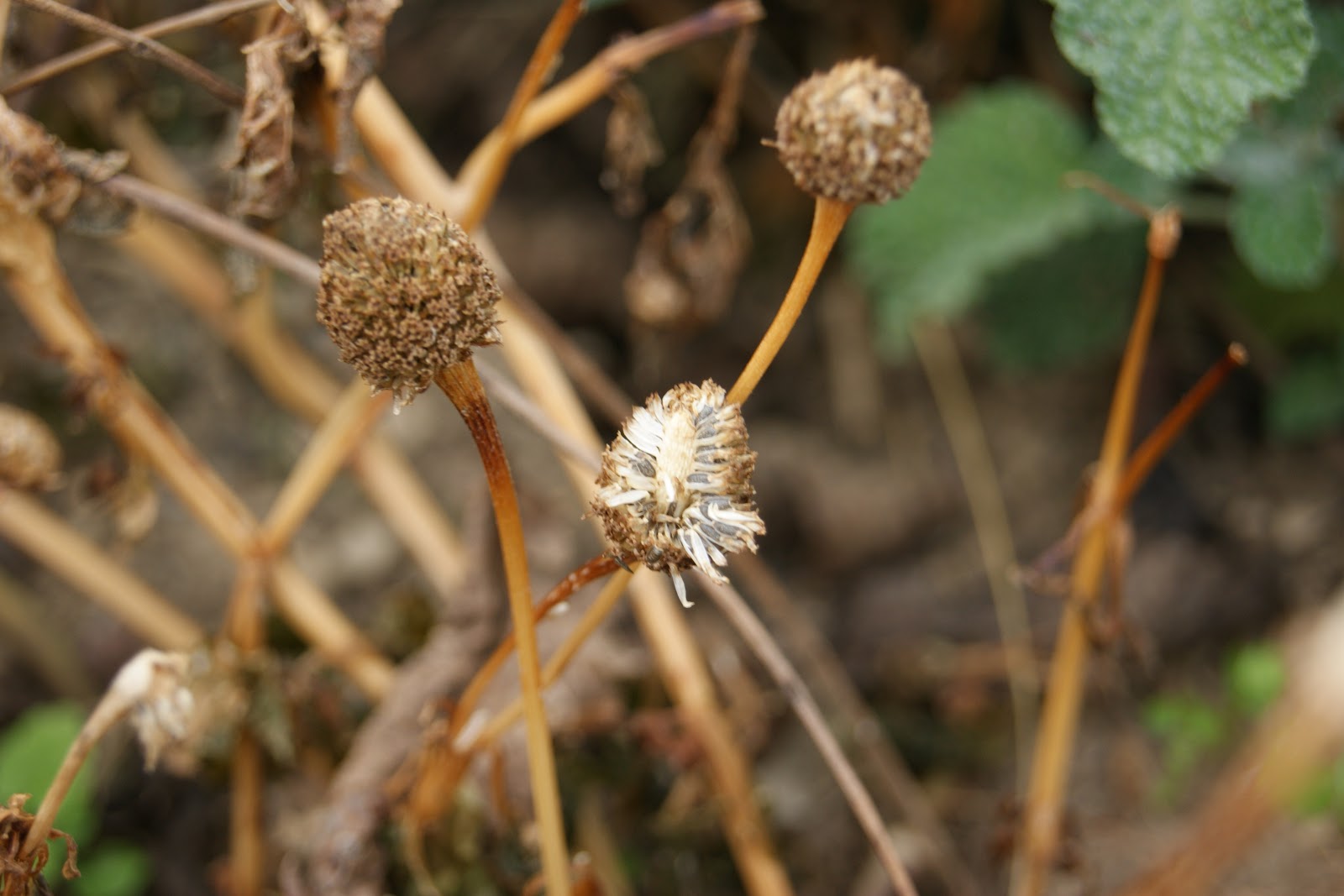
The Toothache Plant is an annual, meaning that it will have to be replanted from seed in the spring.

The seeds are very small. each dried flower head contains scores of seeds.

While many medicinal plants used during the 19th century are now viewed as poisonous, the toothache plant is not. When eaten raw, the leaves and flowers will produce a mild sour, tingling, and numbing sensation in the mouth and throat, making it an effective treatment for toothaches and sore throats. Many Eastern cultures still use the plant in food, both cooked and as a raw green. Here at the Pry House, we have enjoyed tasting the plant and experiencing it's unique effect in the mouth.


White Horehound is another popular 19th century medicinal plant which is still considered safe and edible. Many people still use horehound, usually in lozenges, to relieve sore throats, improve digestion, and reduce inflammation. I also believe that it tastes very pleasant in candies.

Horehound seeds are even smaller than Toothache Plants and very difficult to extract. In frustration, I gathered many of the seed pods to spend time later in extracting the seeds. Horehound is a perennial plant, however, meaning that it will survive the winter and return in the spring without sowing new seeds. These seeds will only be necessary if I wish to grow new plants or the existing ones should have a mishap.

Not all of plants going to seed in the garden were intentionally planted there. Some are volunteers that most gardeners would consider weeds, but because they were used by people in the 1860s, I have left them. Sweet Annie, for example is growing all throughout the garden. It is getting ready to scatter it's tiny seeds (smaller than a pinhead) to winter in the soil.

 I have not found any medicinal use for it in the United States during the Civil War (I am still looking!), but it was used for making wreaths and garlands because of it's unique, strong, sweet scent. I do not care for smell of Sweet Annie, but I seem to be alone in this. The plant is not native to the United States, but it has become an incredibly common weed across the country.

Another great volunteer has been Jimson Weed, also called Datura. Jimson is native to the United States, but has spread across the world. It's spiky egg-shaped pods open to expel scores of seeds.

Jimson Weed was frequently used as a highly effective treatment for asthma, and by native peoples as a quasi-anesthetic, as well as for spiritual practices. Jimson is very powerful and unpleasant hallucinogen that is very dangerous if taken improperly. Modern medicine continues to explore it's potential in treating a wide range of problematic conditions.

Jimson Weed seeds I have collected

Another seemingly obvious source of seeds to save would be the unharvested pumpkins. However, because my Connecticut Field Pumpkins grew alongside two other varieties of squash, I cannot be sure that they did not cross-pollinate. In other words, I cannot be sure that the squash did not interbreed and that these are true Connecticut Field Pumpkin seeds.
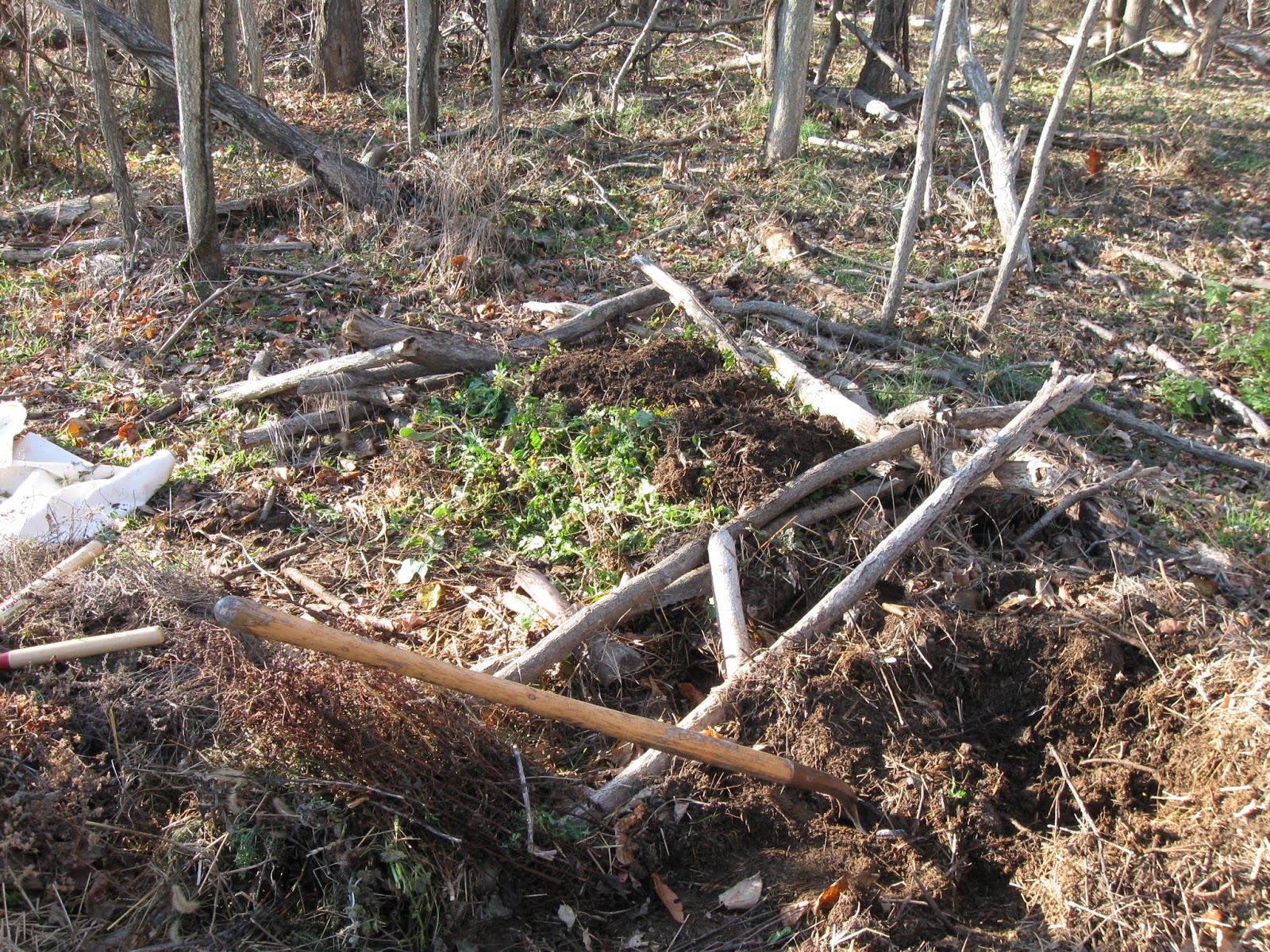
 In preparing to remove the rotten pumpkins and throw them away, I discovered several Red-backed salamanders living underneath! I decided to leave the pumpkins in place for the time being, as the salamanders are a very welcome addition to the garden. Not only are they neat to see, but they are native to Maryland and will help to eat garden pests. The above picture shows the lead-backed variant.

Here is better picture that someone else took, showing the red-backed variant, which I also found in the garden, but did not snap a picture.