A Statement of Purpose


Since 2012 I have been responsible for
the garden at the Pry House Field Hospital Museum on Antietam National Battlefield. The Pry House garden began as a 19th century style medicinal and kitchen garden, including medicinal plants, herbs, and vegetables. As close as possible, these plants mirrored those available to the Pry Family in the 1860s, meaning heirloom varieties. Since then, the garden has transformed to focus exclusively on medicinal plants, becoming an exhibit of the flora that was employed by military and civilian caregivers in the Civil War Era.

I am strictly an amateur, with no real experience in growing a garden. The purpose of this blog is to document my experiences as I learn by doing. It is anything but authoritative and I welcome any comments and advice for a greenhorn. Please be kind!
Showing posts with label jimsonweed. Show all posts

Tuesday, July 30, 2013

In the Weeds Again

As I said last week, the weeds in the Pry Garden have really exploded lately and I have been working hard to cut them back and keep them at bay. I have to thank Karen Dammann, the wife of the Chairman of our Board of Directors, for spending many hours weeding over the past weekend. Much is left to do, but it is really starting to look pretty again, thanks in large part to Karen's work!


I wrote before that many of the plants that we usually consider common weeds were important medicinal plants in the Civil War Era. When most people find them in their garden they pull them out, but I begin to nurture and cultivate them instead.


Dandelions are such a common yard weed and everyone is so familiar with them that I don't waste any space with them in the garden. Nevertheless, they were used as medicine during the Civil War, both on the home front and in Confederate armies. It was principally used as a diuretic (promoting urination) and also as a mild laxative and a tonic to improve digestion. Modern herbal medicine still uses dandelion root and leaves in each of these capacities, especially as a diuretic. Victorians also used dandelion to treat an array of liver, kidney, and bladder conditions, though its efficacy is dubious. The Confederate Medical Department paid citizens by the pound for collected and dried dandelion root.


Another weed that is sometimes used as a medicine is Common or Great Mullein. It has been used as a medicine since ancient times in Europe, from where the plant originates. Mullein's chief use is in treating pulmonary complaints, like chronic cough, asthma, bronchitis, consumption (tuberculosis), and chest congestion. It might be taken as an herbal tea or inhaled as smoke. Mullein is still popular in modern herbal treatments for cough, asthma, etc. The leaves and/or root could be applied topically in a poultice to treat a variety of conditions including ulcers, skin infections, boils and abscesses, and even tumors. I was surprised when a quick search of current research seemed to indicate that there may be some validity to these topical applications, including the treatment of tumors.


The main plant I planned to talk about this week is Jimsonweed or Jamestown Weed, Datura stramonium. Jimsonweed is a very common agricultural weed in this area and it would grow all over the garden if I didn't control it. It grows to be quite large and I find it somewhat ugly. When broken or pulled out of the ground it has a strong, unpleasant odor, not unlike that of the noxious Ailanthus tree. It blooms during the summer in large purple-white flowers that open at night. Jimsonweed produces golfball-sized seedpods which pop open in the fall. The seedpods are covered in small, sharp spikes giving Jimsonweed the alternative name of "thorn apple."
Jimsonweed is native to the US but has spread throughout most of the temperate world. I have allowed it to flourish in one bed of the garden because it was heavily used as a medicine throughout history, including in the Civil War.


Jimsonweed growing in the Pry Garden


In 1863, Confederate Surgeon Francis Peyre Porcher wrote that Datura is,

... a well-known narcotic and antispasmodic, employed in mania, epilepsy, chorea, tetanus, and palsy... [a doctor] frequently saw maniacs restored to perfect saneness of mind, which they never afterwards lost, by the continued use of the extract of our common stramonium; and by the same means he effectively cured the delirium so often attendant upon childbirth, where every other remedy had proved abortive.
                    - Resources of the Southern Fields and Forests, 1863


One of its chief applications was the treatment of asthma by inhalation of smoke, which temporarily paralyzed spasming pulmonary branches of the lungs. As Porcher noted, it was also employed in many conditions involving temporary insanity, muscle spasms, and involuntary movements; it was the drug of choice in treating epilepsy. Datura was also used in the treatment of acute and chronic internal pain, as might result from rheumatism or venereal diseases. Certain compounds found in Jimsonweed are used today to combat symptoms of Parkinson's Disease and other neurological conditions, including drug and alcohol withdrawal. It was also employed in early ophthalmology, as Procher wrote;

Preparations of stramonium applied to the eye, it is well known, diminish sensibility and dilate the pupil. I have seen the extract employed to a large extent in the New York Eye Infirmary, in which institution it has entirely taken the place of belladonna [nightshade] as an application for dilating the pupil.


Jimsonweed is a very powerful but dangerous psychoactive drug. Native American tribes from the Atlantic to the Pacific utilized the plant, especially the seeds, to create visions which might span days and to communicate with deities or the spirit world. When used improperly, the drug can cause hallucinations, delirium, amnesia, rapid heart rate, hyperthermia, and death.


This goes for just about all of the medical subjects I write about on this blog, but especially in this case,

Do Not Try This!

Tuesday, January 8, 2013

Stratifying Seeds (I Hope)

I took a break from the blog last week because it was New Year's, and in the wake of the Christmas holiday there was nothing much to talk about. I hope that most were able to enjoy a little time off with friends and family.

We are in the heart of winter now, but it's still time for me to begin the preparations for new plants in the spring. I wrote in previous posts that in the fall I collected some seeds from the wild and from plants in the garden. Many of those seeds have to be properly prepared if I am going to sow them for growing this year.

Separating milkweed seeds from the fluff

When we buy packets of seeds from the store or online, they are usually properly prepared and ready to be planted right away. However, the seeds of many plants, especially perennials, have to go through a winter's cold before they are willing to germinate in the spring. This is a protective measure so that seeds do not drop in the fall and begin to sprout, only to be killed by freezing temperatures.

Because I collected these seeds rather than leaving them in the dirt outside, I will need to give them a simulated winter inside before I can use them in the spring. This process is called stratification. this is something I have never tried before and I am hoping that it works, giving me productive seeds to start a little later this year.

Milkweed seeds ready for a cold treatment

To stratify the seeds, I needed some kind of medium to hold them during the process. Many experts have recommended a variety of options including vermiculite, perlite, and sand. I have chosen fine peat moss, made from decomposed sphagnum. I purchased it from a garden store, so it is sterile, meaning that it should be free from diseases and unwanted seeds from weeds.

Peat Moss

I took a bit of peat moss from the sealed packaging and added some water in a bowl. I then nestled the seeds in the dampened moss. Dampening the moss is supposed to allow the seeds to absorb some moisture, helping prepare them for eventual germination.


I put each bunch of seeds into small plastic resealable bags. After a few days at room temperature to encourage the seeds to take up some moisture, I put those bags in the refrigerator. I chose the bottom drawer of the refrigerator because that tends to be the coldest place without freezing.


I am currently stratifying for different species: Common Milkweed, Butterfly Weed, Jimson Weed, and Common Mullein. Stratification times can vary widely for different types of seeds, but for these particular species I think that about a month will be enough time in the cooler. 

I am very hopeful that this process will yield positive results come spring. If it does not work out though, it was at least an interesting learning experience.


Tuesday, November 13, 2012

Seeds and Salamanders

It has been a long time since my last post on this blog, but I am going to be more faithful about keeping things up to date! It is mid-November and the garden is preparing to go dormant for the winter months. I hope that I can find enough subject matter to keep posting regularly during the cold.

It is fall, so many of the plants in the garden are producing seeds which might overwinter and sprout in the spring. I am making an effort to collect some of those seeds and store them for future planting. Seed catalogs and companies were not a large institution in the United States until the late 19th century. Prior to that, most home gardeners collected seeds in their own garden from year to year, or shared seeds and cuttings with neighbors.

One of the advantages to growing heirloom varieties of fruit, vegetables, and other plants is that they will usually produce viable, true seeds to replant the next year. Many modern plants popular in in both vegetable and ornamental gardens will produce a sterile seed, not capable of growing another plant. Even viable seeds from hybrid plants will generally not grow into the same variety of plant which bore them.

Most of the seeds which I have been collecting from the garden are not from vegetables, but the medicinal plants and herbs in the garden. I will take some space to show a few of the seeds I have been working with.

The Toothache Plant is an annual, meaning that it will have to be replanted from seed in the spring.

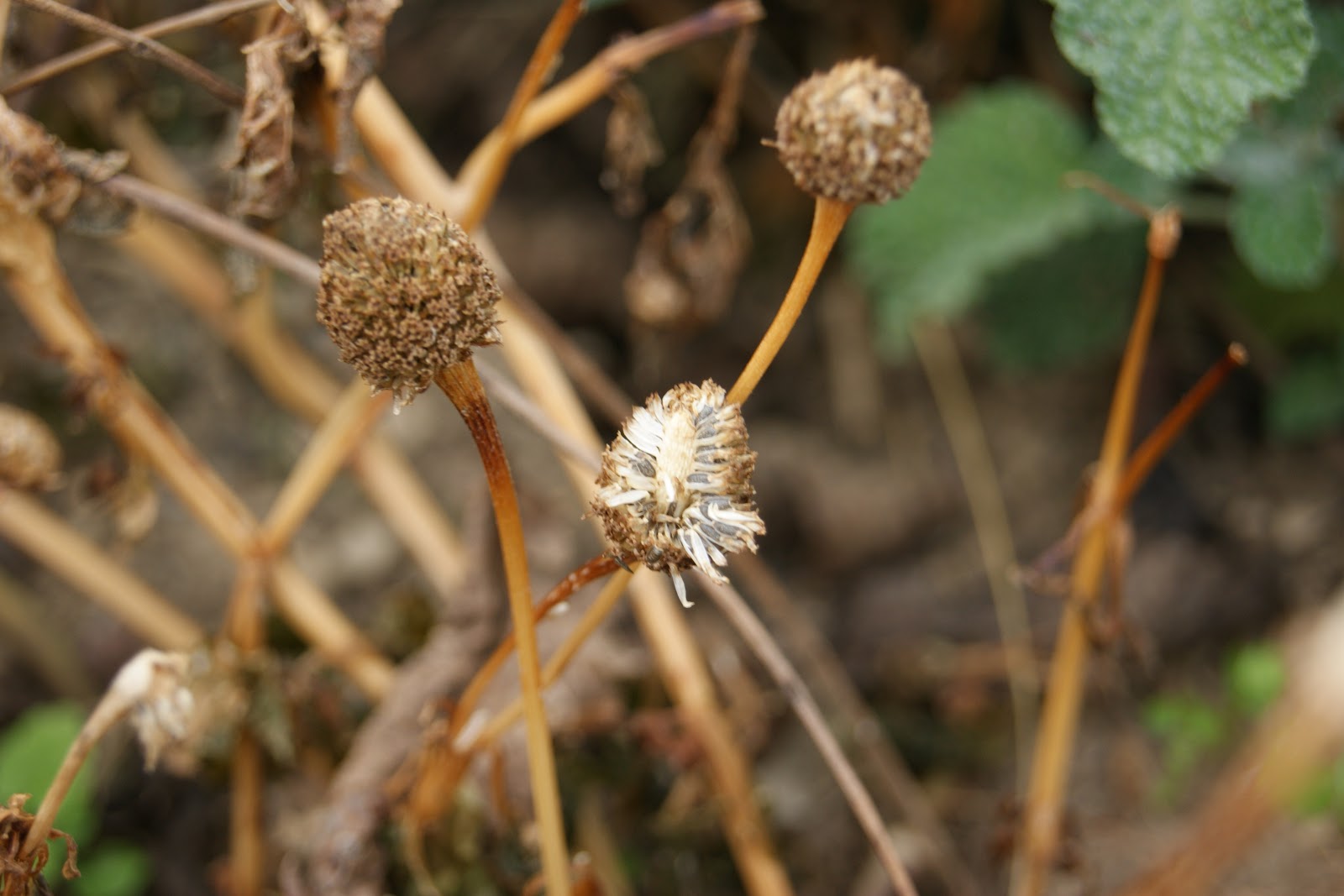
The seeds are very small. each dried flower head contains scores of seeds.

While many medicinal plants used during the 19th century are now viewed as poisonous, the toothache plant is not. When eaten raw, the leaves and flowers will produce a mild sour, tingling, and numbing sensation in the mouth and throat, making it an effective treatment for toothaches and sore throats. Many Eastern cultures still use the plant in food, both cooked and as a raw green. Here at the Pry House, we have enjoyed tasting the plant and experiencing it's unique effect in the mouth.


White Horehound is another popular 19th century medicinal plant which is still considered safe and edible. Many people still use horehound, usually in lozenges, to relieve sore throats, improve digestion, and reduce inflammation. I also believe that it tastes very pleasant in candies.

Horehound seeds are even smaller than Toothache Plants and very difficult to extract. In frustration, I gathered many of the seed pods to spend time later in extracting the seeds. Horehound is a perennial plant, however, meaning that it will survive the winter and return in the spring without sowing new seeds. These seeds will only be necessary if I wish to grow new plants or the existing ones should have a mishap.

Not all of plants going to seed in the garden were intentionally planted there. Some are volunteers that most gardeners would consider weeds, but because they were used by people in the 1860s, I have left them. Sweet Annie, for example is growing all throughout the garden. It is getting ready to scatter it's tiny seeds (smaller than a pinhead) to winter in the soil.

 I have not found any medicinal use for it in the United States during the Civil War (I am still looking!), but it was used for making wreaths and garlands because of it's unique, strong, sweet scent. I do not care for smell of Sweet Annie, but I seem to be alone in this. The plant is not native to the United States, but it has become an incredibly common weed across the country.

Another great volunteer has been Jimson Weed, also called Datura. Jimson is native to the United States, but has spread across the world. It's spiky egg-shaped pods open to expel scores of seeds.

Jimson Weed was frequently used as a highly effective treatment for asthma, and by native peoples as a quasi-anesthetic, as well as for spiritual practices. Jimson is very powerful and unpleasant hallucinogen that is very dangerous if taken improperly. Modern medicine continues to explore it's potential in treating a wide range of problematic conditions.

Jimson Weed seeds I have collected

Another seemingly obvious source of seeds to save would be the unharvested pumpkins. However, because my Connecticut Field Pumpkins grew alongside two other varieties of squash, I cannot be sure that they did not cross-pollinate. In other words, I cannot be sure that the squash did not interbreed and that these are true Connecticut Field Pumpkin seeds.

 In preparing to remove the rotten pumpkins and throw them away, I discovered several Red-backed salamanders living underneath! I decided to leave the pumpkins in place for the time being, as the salamanders are a very welcome addition to the garden. Not only are they neat to see, but they are native to Maryland and will help to eat garden pests. The above picture shows the lead-backed variant.

Here is better picture that someone else took, showing the red-backed variant, which I also found in the garden, but did not snap a picture.