A Statement of Purpose


Since 2012 I have been responsible for
the garden at the Pry House Field Hospital Museum on Antietam National Battlefield. The Pry House garden began as a 19th century style medicinal and kitchen garden, including medicinal plants, herbs, and vegetables. As close as possible, these plants mirrored those available to the Pry Family in the 1860s, meaning heirloom varieties. Since then, the garden has transformed to focus exclusively on medicinal plants, becoming an exhibit of the flora that was employed by military and civilian caregivers in the Civil War Era.

I am strictly an amateur, with no real experience in growing a garden. The purpose of this blog is to document my experiences as I learn by doing. It is anything but authoritative and I welcome any comments and advice for a greenhorn. Please be kind!
Showing posts with label garden. Show all posts

Tuesday, August 12, 2014

Cardinal Blooms


It is summertime and many plants are blooming, including one of my favorites, the Cardinal Flower. Lobelia cardinalis can be found growing wild as a native plant in this region, but it can also be seen in the Pry House Garden. This time of year it gives bright scarlet blooms that really stand out.


I have stumbled on cardinal flowers growing in the wild several times recently. They usually are a water-loving plant, growing on riverbanks, swamps, and other freshwater wetlands with a little bit of shade.

Cardinal Flower at the Quarry Pond
at Fountain Rock Park in Frederick County, MD - 2014


Cardinal Flower on the bank of the Shenandoah River
at Harpers Ferry National Historic Park - 2012
Perhaps one of the reasons why I like the cardinal flower so much is that I have struggled with it for multiple seasons. I tried growing them from seed, but very little came of that effort. Another year I purchased the plant and seemed to do well, but never flowered and never came back after winter.


This year I planted the cardinal flower in a normal bed of the garden, not particularly wet probably a little too sunny. Nevertheless, it really seems to be doing well. It grew to a good size and shot out a lovely red spike of flowers. I hope that it will continue to do well for seasons to come.

Cardinal Flower in the Pry Garden - 2014

Lobelia cardinalis is part of a family of medicinal plants which are native to a wide swath of North America, including Indian Tobacco (Lobelia inflata) and Great or Blue Lobelia (Lobelia siphilitica). They were discovered by Europeans in the early 17th century and exported to Europe for their beauty and perceived medicinal value, but native peoples had been using them for centuries before. According to the USDA:

 The Iroquois had many medicinal uses for cardinal flower. The root was boiled together with the root of Cichorium intybus and the liquid was used to treat fever sores. The mashed roots, stems, leaves, and blossoms were made into a decoction and drank for cramps. The plant was also used as an emetic for an upset stomach from eating something bad. The plant was added to other medicines to give them more strength. The Delaware used an infusion of the roots to treat typhoid. The Meskwaki used this plant as a ceremonial tobacco, throwing it to the winds to ward off a storm. The Pawnee used the roots and flowers of cardinal flower in the composition of a love charm.

Cardinal flower was also employed by some peoples to treat colds, flu, chest congestion, bronchitis, and the respiratory symptoms of other complaints. Writing in 1863, Confederate Surgeon and bontanical medicine expert Dr. Francis Porcher also noted that cardinal flower had been used by native peoples as an anthelmintic, meaning that it expelled parasites from the body.

Cardinal Flower at Harpers Ferry National Historic Park - 2012
Unlike its relative great lobelia, cardinal flower was not adopted by the Confederate Medical Department as botanical remedy. Nevertheless, it remained an important part of American folk medicine in many regions throughout the 19th century.

It does not appear that anyone today is marketing cardinal flower as a nutritional supplement or herbal remedy, and for good reason; as a member of the Lobelia family, cardinal flower is considered toxic to humans. There appears to be no strong evidence, apart from centuries of tradition, that Lobelia cardinalis actually possesses any medicinal qualities.

Tuesday, July 1, 2014

Blooming Black-Eyed Susans

It is a beautiful early summer day on the Antietam Battlefield! The birds are singing, the bees are buzzing, and the flowers are in bloom!


Here in the Pry Medicinal Garden, our healthy crop of Black-eyed Susans are in peak bloom and looking gorgeous!

The common Black-eyed Susan, or Rudbeckia hirta, is native to a wide swath of Eastern and Central United States. It is type of daisy and coneflower, alternatively known as Golden Jerusalem, Gloriosa Daisy, or Yellow Ox-Eye Daisy. The Black-eyed Susan is, however closely related to another plant in the Pry Garden, the Purple Coneflower, Echinacea purpurea. The two were once listed in the same genus.


The Black-eyed Susan has long been associated with Maryland and was officially designated as the state flower in 1918. The flower's association with Maryland stems not only from its ubiquitous summer blooms in open places across the state, but also for its colorful resemblance to the yellow and black Calvert family crest. Cecil Calvert, 2nd Lord Baltimore, founded Maryland in 1634, though he never personally set foot there.
The modern Maryland state flag, featuring the yellow and black Calvert crest

Cecil Calvert, 2nd Lord Baltimore


The root of the Black-eyed Susan plant has been used medicinally for untold centuries, beginning with eastern Native Americans. The plant was not officially adopted by either the Union or Confederate Medical Departments, but it continued in popular use as a folk medicine.


Rudbeckia hirta roots

Black-eyed Susan root is and was most commonly used similarly to its cousin the Purple Coneflower. When ingested, it is believed to boost the body's immune system and reduce they symptoms and duration of common diseases like cold and flu. It is also a mild astringent that might be used to relieve minor swelling and skin irritations. It is also believed to be a mild diuretic, promoting urination and removing water from the body. Some accounts indicate that some native peoples may even have used Black-eyed Susan root as an external treatment for poisonous snakebites, though the efficacy of that seems doubtful.


To most people today, the Black-eyed Susan is simply a beautiful summer flower that can be found growing wild and in flower gardens, especially here in Maryland.

Wednesday, August 7, 2013

A Deadly Predator

In the Pry Garden, I see a myriad of small creatures, or signs that they have been there. Some of these are bad for the garden, some are very good, and others are neutral. I encounter amphibians like toads and salamanders, mammals like rabbits and groundhogs, birds like bluebirds and wrens, and a host of insects and arachnids, many of which I cannot identify.

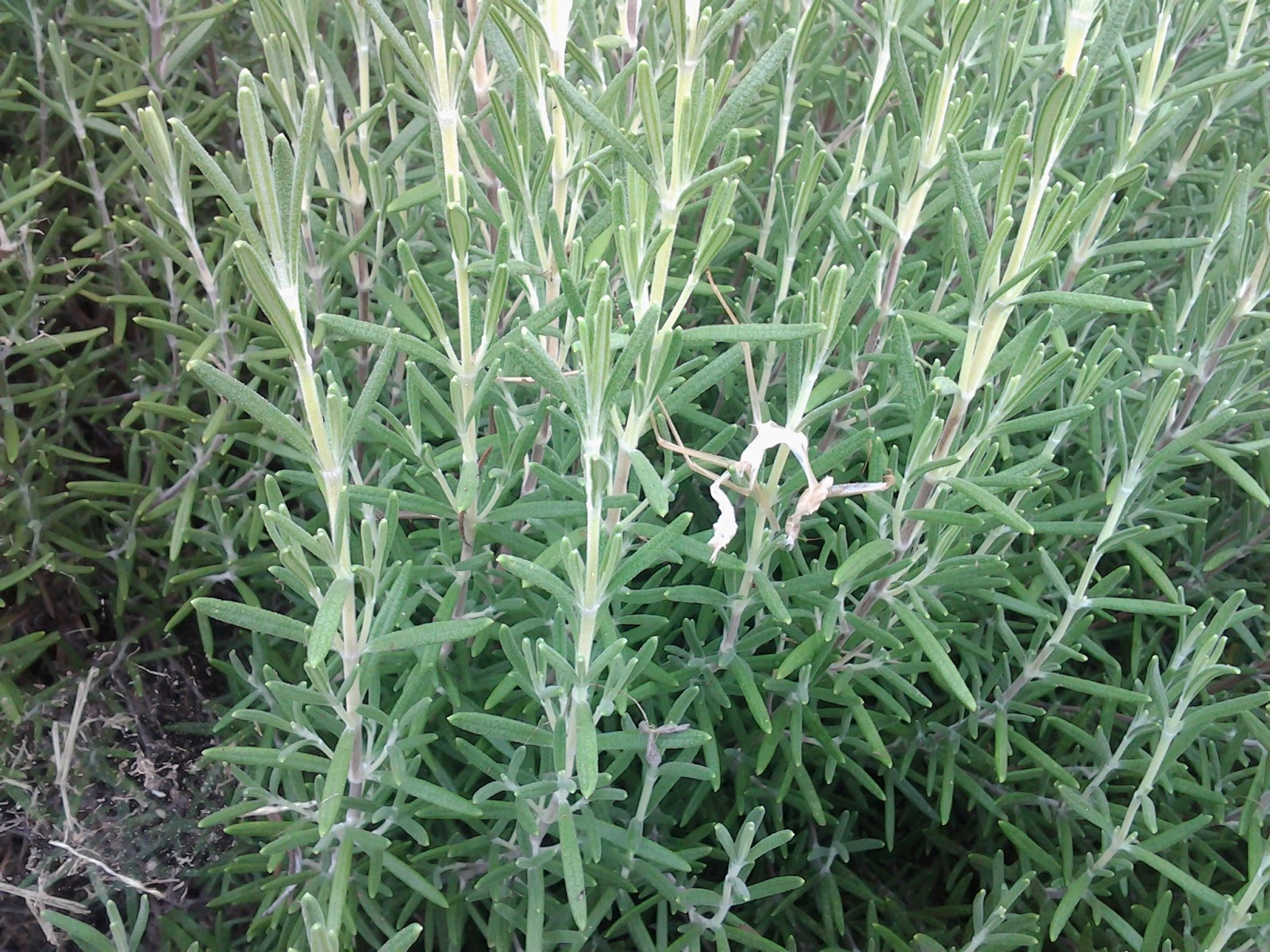
A Praying Mantis in the Rosemary Bushes of the Pry Garden

A favorite and regular insect that I see in the garden is the Praying Mantis. We have so many at the Pry House that I frequently encounter them while in the garden. I have always had a great affinity for the mantis since I was very young, and to find one was always very exciting.
 
A Mantis which I Photographed Last Year in the Garden
In doing some reading on the mantis, I have learned that there are many different species, not just around the world, but right here in Maryland. Some are native the United States, but others have been introduced, intentionally or accidentally, from Europe and Asia. Some are quite unusual, but most look fairly similar and I can't quite tell the difference. Therefore, I am not sure which species we have living here in the Pry Garden. (If anyone might know, please comment!) I also learned that the name "Praying Mantis" traditionally applies to just one European species, Mantis religiosa, but we generally apply it to all mantises.

A sandy-colored mantis photographed in California; up close, it looks like an alien creature!

Up close, the mantis really looks like a scary alien creature from movie. That impression is somewhat justified, as it is a super-alert and voracious predator. A praying mantis feeds mostly on large insects, but it will eat just about any creature it can successfully subdue. A mantis has not poisons or stings, but grabs its prey and begins to eat it alive. Mantises will even eat one another, especially when young; the female praying mantis is infamous for the practice of killing and eating her mate, which is true, if exaggerated.

An Asian Species of Mantis Chows Down on an Insect!
 
Here in the Pry Garden, the praying mantis a mixed blessing, but mostly good. It eats just about every insect it can get its raptorial legs around, which are mostly pests, but could also include beneficial insects like native pollinators. Some people purchase mantis eggs to encourage them as a form of pest management in the garden.


A Shed "Skin" from a Praying Mantis in the Garden


Someone else's picture of a mantis egg case


The mantises that I have photographed here are not yet mature. Praying mantises will hatch as tiny nymphs from eggs when the weather warms in Spring or early Summer. They will undergo several periods of growth and molting of their exoskeletons before reaching adulthood. Most species of adult mantis have wings and the smaller males can usually fly short distances. In the Fall, mantises will mate, lay eggs which will overwinter, and die with the arrival of Winter.


The praying mantis is well-adapted at camouflage, which helps it to snag unsuspecting prey, but also to avoid becoming prey itself to larger animals. Their color, usually green or brown, blends in with their environment of leaves and bark. Some mantises can also slowly change their color over successive moltings. Most mantises will also gently rock back and forth, which may be an attempt to mimic foliage blowing in the wind, but might also be a technique to improve their vision. I have often seen them doing this on the bushes.


I see you! The camouflage is fairly effective in our rosemary bushes.

The praying mantis may be a dangerous creature in the world of insects, but they are totally harmless to humans. The next time you are outside, look closely in the leaves and you just might find this odd-looking critter. Don't be afraid and don't kill them; they are really a good friend to keep you company in the garden.

A friend was hanging out


Wednesday, June 5, 2013

A Search for Plants - Your Help is needed!

I did not get a chance to post to the blog yesterday because we were so busy here at the Pry House Field Hospital Museum and I was hopping! If you have not yet  come to pay us a visit, it's supposed to be a beautiful weekend coming up!


Don't mind the weeds!!!

The Pry Garden has really expanded this year. We have some new medicinal plants this year that we have never before been able to display at the Pry House. Nevertheless, there are still so many more plants which were used as medicine by Union and Confederate armies, as well as civilians on the home front. I would like to add as many as possible into our exhibit at the Pry House Field Hospital Museum.

Some new additions:


Fringed Bleeding Heart/Cranesbill


Milk Thistle


Foxgloves


To expand the collection, I am turning to friends, family, and my other blog followers. Below is a list of the plants which I am most keep to obtain for transplant into the garden. I thought people would enjoy seeing a list of the kinds of things that I am looking for. Many of them are native, most can theoretically be found in the wild in our region.


Indian Tobacco, a species of Lobelia, is native to our region


.

Those listed in bold are specifically listed by the Confederate Medical Department during the Civil War.

Spreading Dogbane / Fly-Trap Dogbane - Apocynum androsaemifolium
Hemp Dogbane / Indian Hemp / Rheumatism Root - Apocynum cannabinum
Yellow Lady’s Slipper - Cypripedium pubescens
Pipsissewa / Prince’s Pine - Chimaphila umbellata
Hemlock - Conium maculatum
(Black) Henbane / Stinking Nightshade - Hyoscyamus niger
Senega Root - Polygala Senega
Queen’s Delight - Stillingia sylvatica
Lobelia / Indian Tobacco - Lobelia inflata
Burdock - Arctium lappa or minus
Goldenseal - Hydrastis canadensis
Steeplebush or Hardhack - Spiraea tomentosa
American Gentian - Gentiana Catesbaei
American Columbo or Yellow Gentian - Frasera caroliniensis
Flowering Spurge - Euphorbia corollata
Indian Physic or Bowman’s Root - Gillenia trifoliata
Horse Gentian or Feverwort - Triosteum
Virginia Snakeroot - Aristolochia serpentaria
American Centaury / Rosepink - Sabatia angularis
American Wormseed - Dysphania Anthelmintica or Chenopodium ambrosioides
Fleabane - Erigeron
American or Wild Senna - Senna hebecarpa
False or Indian Hellebore - Veratrum viride
American Wintergreen /Teaberry /Checkerberry /Boxberry /Partridgeberry- Gaultheria procumbens
Woody Nightshade /Bittersweet /Bitter Nightshade /Fellenwort - Solanum ducamara
Calamus /Sweet Flag - Acorus calamus
Skunk Cabbage - Symplocarpus foetidus
Sesame Plant - Sesamum indicum
Blue Vervain - Verbena hastata
Agrimony / Agrimonia
Mad-dog Skullcap - Scutellaria lateriflora
Self-heal / All-heal - Prunella vulgaris
Oxalis / Wood Sorrel - Oxalis acetosella
Colt’s Foot - Tussilago farfara
Compass Plant/Flower - Silphium laciniatum
Prairie Dock - Silphium terebinthinaceum
Sweet Everlasting/Rabbit Tobacco - Gnaphalium obtusifolium (Not Life Everlasting, a sedum)
Mugwort/Felon Herb/Chrysanthemum Weed/Wild Wormwood - Artemisia vulgaris
Pilewort/Fireweed - Erechtites hieracifolia
Toothwort/Crinkle Root - Cardamine diphylla
Wahoo - Euonymus atropurpureus
 
Indian Hellebore is native to the Eastern US and was used commonly by both
Union and Confederate Surgeons.


I can afford to purchase plants from commercial sources, but these have either been too tricky to find, or have proved to be prohibitively expensive. If anyone knows of a good and affordable source for these specimens, please let me know! If you have any of these plants, live near us, and would like to donate some to the Pry Garden, I would be ever so grateful!


Bittersweet/Woody Nightshade - native to Europe and Asia, but is a problematic
 invasive species in North America. Unfortunately for me, I can't find it here!

Please do not go trespassing on private property to find these plants or remove them from the wild if it is illegal to do so!

Goldenseal is a native but endangered species in Maryland.
It is still a very popular medicinal plant.


Wednesday, May 22, 2013

Mustard: Not Just for Your Hot Dog

This week I am going to talk a little bit about a truly versatile plant that grows in the Pry Garden, Mustard. It has an important place in both the garden's medicinal and kitchen aspects as a spice and a green vegetable.


Mustard has been grown by man since ancient times. It figures prominently in a famous parable of the Gospels:

Another parable put he forth unto them, saying, The kingdom of heaven is like to a grain of mustard seed, which a man took, and sowed in his field: Which indeed is the least of all seeds: but when it is grown, it is the greatest among herbs, and becometh a tree, so that the birds of the air come and lodge in the branches thereof. - Matthew 13: 31-32

Most people are familiar with yellow or brown mustard as a condiment on their hot dogs and sandwiches, or an ingredient in their cooking.


This comes for grinding the tiny mustard seeds into powder and mixing it with water, salt, and other ingredients to form the many varieties of condiments available in the store. Mustard was as common and popular during the Civil War as it is today.


Less popular today, mustard greens were once a staple vegetable in the United States, especially in the South. They can be eaten raw or cooked up like collard greens, turnip greens, kale, and other leafy vegetables.


I am normally a big fan of cooked greens, but I was sorely disappointed upon trying these mustard greens to find that I could not abide them. To be fair, I have never really liked mustard in my food and these leaves do taste surprisingly strong of raw mustard. I am sure that some other people around the museum might find them a bit tastier.


 In his definitive 1863 text, Resources of the Southern Fields and Forests, Francis Porcher writes, "The demand for the production of this plant as a local irritant, should induce every planter and farmer to grow it. Enormous quantities are required to supply the armies; besides that, it is largely consumed in every household." Porcher continues to explain that mustard is useful in cooking as well as in its capacity to produce mustard oil, which was valuable in industry, agriculture (feeding livestock), and domestic use (cooking and burning for light). Mustard is very closely related to the canola or rapeseed plant, which was used in the 19th century, just as it is today, to produce canola oil for cooking and industrial applications.


Commercially available mustard plasters from 1906
Almost unheard of in the 21st century, mustard was considered a powerful and commonplace medicine in the 1800's. It's most common household application was in mustard plasters. Mustard seed was ground to a powder, mixed with flour and water or egg, and the paste was applied to a cloth. This was then employed as a poultice on the exposed chest or back as a common treatment for colds, bronchitis, or other lingering respiratory problems. It might also be used as a treatment for rheumatism, a general term for chronic pain and problems with joints and connective tissues. The belief was that mustard would help to stimulate what we today the immune system, as well as alleviate pain.

Commercially available mustard plasters from the early 20th century
For a great illustrated explanation of how mustard plasters were (and apparently still are) applied, check out this blog.


In Dr. Joseph Carson's Materia Medica of 1851, mustard is listed as an important medicine, primarily as a rubefacient, which is a substance that causes redness of the skin by dilating blood vessels and increasing circulation when applied topically. Carson's reasoning seems to be that such application would help to reduce pain and inflammation by improving circulation in the nearby skin, but the correlation is not fully explained. Perhaps this is something of a holdover from the heroic era of medicine, which was based on the humors of the body and included such practices as bleeding and cupping. Carson also lists mustard seed as an effective laxative.

During the Civil War, the Confederate Medial Department listed mustard as an important medicinal plant for which it would pay 75 cents per pound of seeds.

Tuesday, May 14, 2013

New Plants and Planting in the Rain

Last Friday was one of the days that I look forward to all year. Along with April Deitrich and Judy Candela, my coworkers here at the museum, I went to the annual Landis Valley Herb and Garden Faire in Lancaster County, PA. It's a long drive, but the incredible volume and variety of plants for sale at the Landis Valley Museum every Mothers Day Weekend makes it worth the trip.


Though it is so easy to be distracted by all of the beautiful and unusual plants, I was on a mission to acquire new medicinal plants for the Pry Garden. I made a two-page wish list and both April and Judy got their own copy. I was hoping to scratch a few more items off the list than I did, but I came home with a good haul and we all had a great time. It all seemed to be over too quickly!

Here are some pictures from the trip:


heirloom tomatoes and other vegetables


April and Judy!


Plant Sitting! The museum would babysit your plants while you kept shopping!

Even though I did not get as many different plants as I wanted, I still had a lot to plant.


I also had to plant the the seedlings that I have been growing at home since winter.

Tomatoes from seed!
Saturday was our scheduled planting day, but unfortunately the weather did not cooperate. We had rain throughout most of Friday night and Saturday. That kept most of our volunteers away and made the garden paths very muddy. Luckily a few dedicated volunteers did come out to help and we had a two-hour stretch without and rain, and even a little blue sky!

Standing in the mud!

Refreshments for volunteers


For a brief time, it was a beautiful day!


 Thanks to those who came out and helped! It really made an ambitious day possible!

Despite the thick mud, it's not looking too bad!